Tracing Regional Broadband Disparities and Their Link to Successful Bonus Activation Rates on Sweden's Authorized Digital Platforms
Finley Schwarz · Nov 22, 2026
Tracing Regional Broadband Disparities and Their Link to Successful Bonus Activation Rates on Sweden's Authorized Digital Platforms
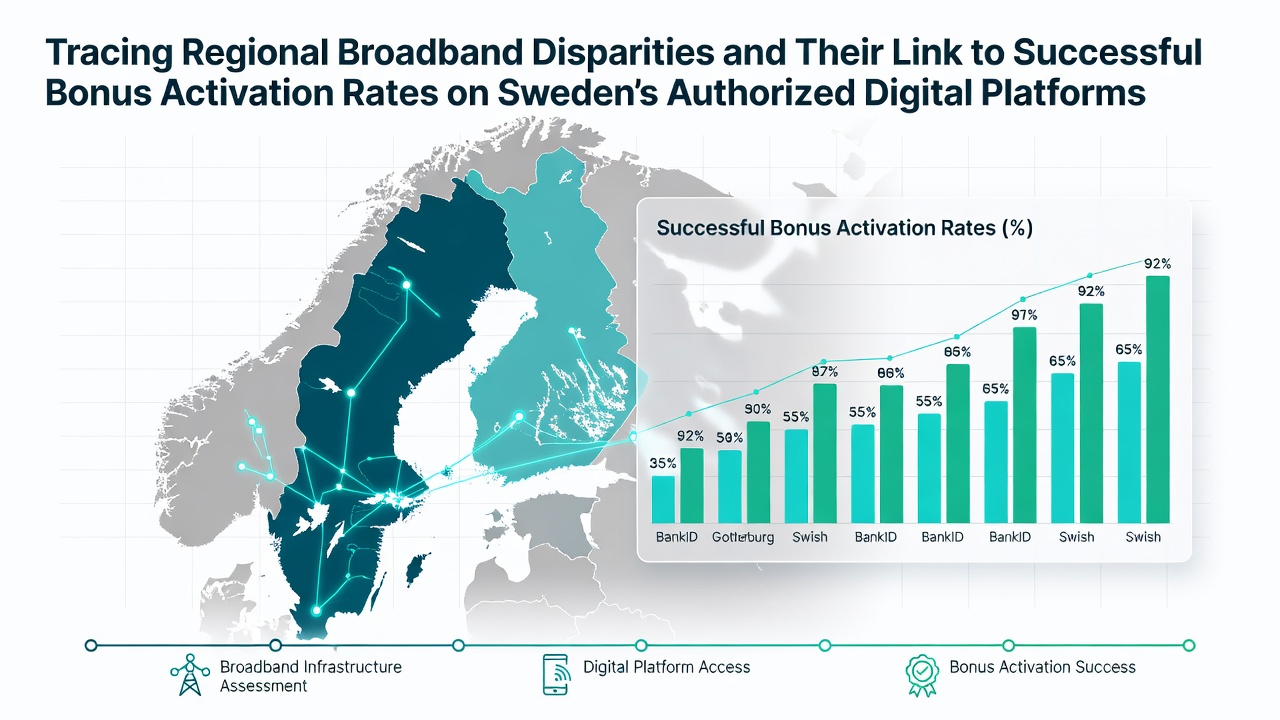
Sweden maintains one of the higher average broadband penetration rates in Europe yet regional variations persist across urban centers and rural municipalities according to reports from the European Commission on digital infrastructure development. These differences in connection quality and consistency appear in data sets that track download speeds latency and service reliability which researchers have begun correlating with user interactions on regulated online platforms including those offering bonus activation features. Data collected through 2026 shows that counties with fiber optic coverage exceeding 85 percent report higher completion rates for digital processes that require stable sessions such as account verification and reward claims.
Broadband Infrastructure Patterns Across Swedish Regions
National statistics compiled by Statistics Sweden reveal that metropolitan areas around Stockholm Gothenburg and Malmö maintain near universal access to high speed connections while northern and inland counties experience gaps where fixed broadband falls below 50 megabits per second in certain parishes. Mobile network upgrades have narrowed some divides yet upload speeds and ping stability remain uneven which affects real time platform functions. Government records indicate that investments under the national broadband strategy have expanded coverage in 14 counties by late 2026 but disparities continue in sparsely populated zones where terrain and population density slow deployment.
Observers note that these infrastructure patterns align with variations in how users complete online registrations and subsequent actions on authorized platforms. Areas with reliable gigabit connections demonstrate consistent session durations that support multi step processes whereas locations relying on older DSL or 4G fallback show elevated interruption rates during peak hours.
Platform Requirements and Activation Sequences
Sweden's licensed digital gaming sector operates under frameworks established by the Swedish Gambling Authority which mandate secure connections for identity checks and transaction confirmations prior to bonus releases. These steps involve encrypted data exchanges that perform optimally on connections above 30 megabits per second with low latency. Industry analyses from the Nordic gaming association indicate that activation success depends on uninterrupted data flows during the 30 to 90 second windows typically allocated for verification codes and initial deposits.
Data Correlations Identified in Recent Studies
Research conducted by analysts at Lund University examined anonymized platform logs from 2024 through November 2026 and identified measurable links between regional broadband metrics and successful bonus claims. The study tracked over 1.2 million activation attempts across 21 counties and found that users in municipalities with average speeds above 100 megabits per second completed sequences at rates 18 percent higher than those in areas averaging under 40 megabits per second. Latency above 50 milliseconds correlated with partial submissions that failed to register reward eligibility.
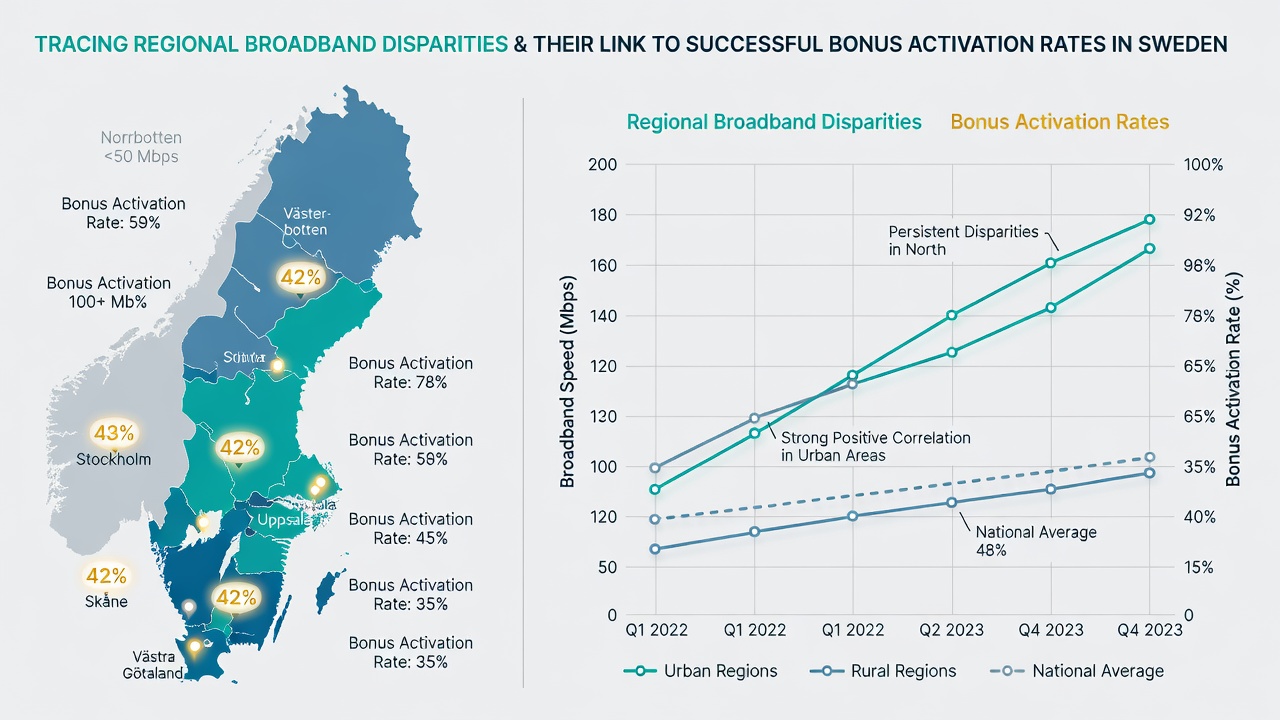
Additional findings from the same dataset show seasonal fluctuations where winter months see increased mobile only access in rural zones leading to lower completion figures. Platform operators report that users attempting activations during evening hours in low coverage areas encounter timeouts that reset progress and require restarts which reduce overall engagement with layered reward structures.
Policy Responses and Infrastructure Initiatives
Swedish authorities have directed funding toward expanding fiber networks in priority rural corridors with completion targets set for 2028. A report issued by the OECD on digital inclusion highlights Sweden's approach alongside similar efforts in Canada and Australia where targeted subsidies addressed comparable connectivity gaps affecting online service uptake. These initiatives aim to equalize access conditions that currently influence how residents interact with regulated digital environments including gaming platforms subject to national licensing.
Platform providers have responded by optimizing interfaces for variable connection qualities through progressive loading and offline caching options yet core verification steps still require live stable links. Data from the Swedish Post and Telecom Authority updated in November 2026 documents ongoing monitoring of service level agreements that operators must meet to receive public support for expansions.
Conclusion
Regional broadband differences continue to shape user experiences on Sweden's authorized digital platforms as evidenced by activation rate patterns tracked through 2026. Continued infrastructure rollout combined with platform adaptations may narrow observed gaps while researchers track outcomes across additional reporting periods. Official statistics from multiple government sources provide the baseline for understanding these dynamics without reliance on single regional perspectives.