Seasonal Campaigns and Their Effect on Player Rewards in Sweden's Digital Gambling Sector
Parker Meier · Sep 27, 2026
Seasonal Campaigns and Their Effect on Player Rewards in Sweden's Digital Gambling Sector
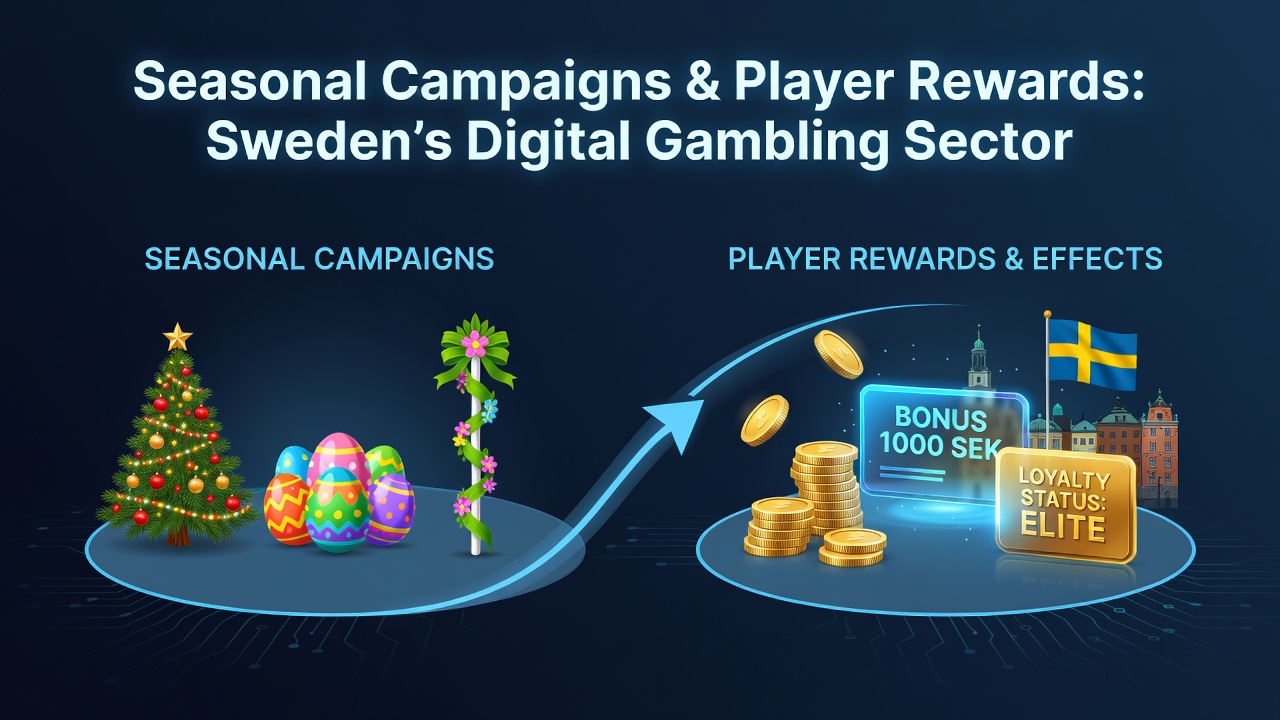
Seasonal campaigns have become a structured feature of Sweden's licensed digital gambling market since the re-regulation that took effect in 2019, and operators continue to align promotional calendars with national holidays, sports seasons, and cultural events. Data from the Swedish Gambling Authority shows that activity peaks typically occur around Christmas, midsummer, and major football tournaments, with reward structures adjusting accordingly to match player engagement patterns observed across licensed platforms.
Regulatory Context Governing Seasonal Offers
Spelinspektionen maintains oversight of all bonus mechanics, requiring that seasonal campaigns comply with the same transparency and wagering rules applied year-round. Platforms must publish terms that specify contribution rates, validity periods, and maximum winnings from bonus funds, and these requirements remain unchanged whether a promotion runs in December or June. Operators that fail to meet these standards face administrative sanctions, which has led to standardized disclosure practices across the sector.
Research conducted by Nordic gambling research groups indicates that seasonal reward tiers often incorporate time-limited multipliers on loyalty points or deposit matches tied to specific calendar windows, yet the underlying licensing conditions stay constant. Players who participate during these periods encounter the same age-verification and account-funding rules that apply outside campaign windows.
Common Structures in Seasonal Reward Programs
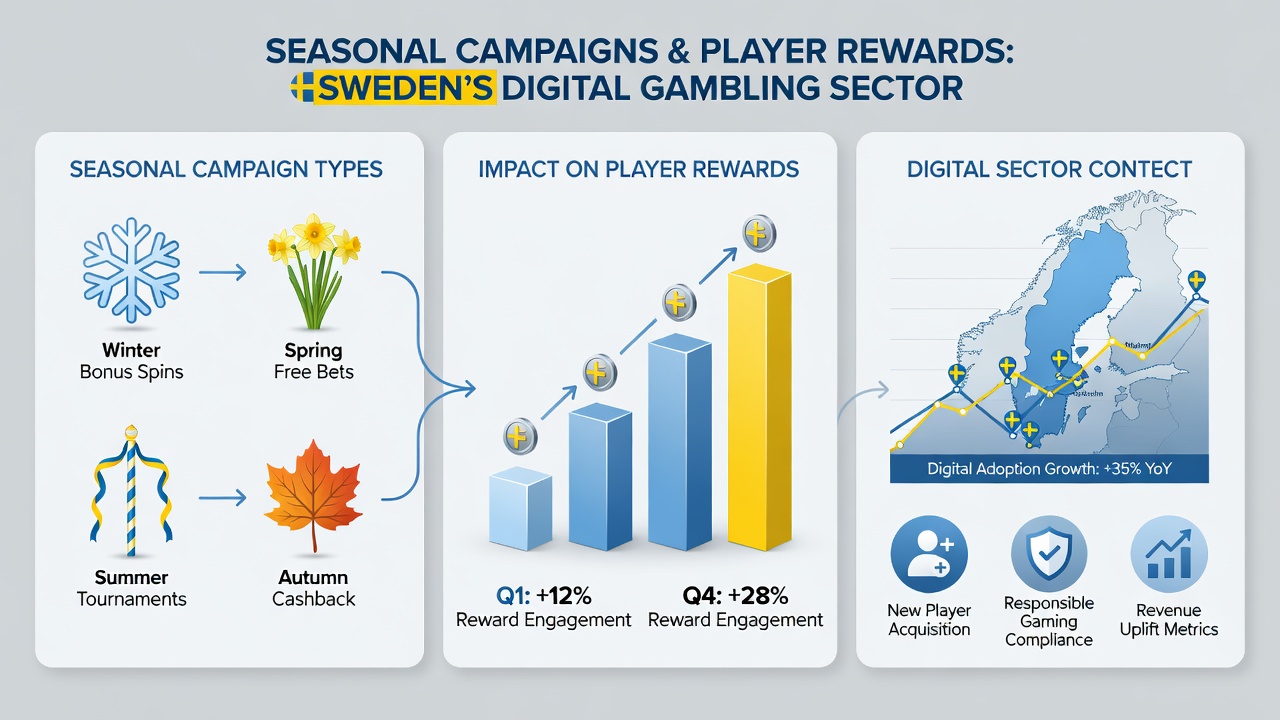
Operators typically structure seasonal campaigns around deposit-match percentages, free-spin allocations, or cashback percentages that activate only during defined periods. For example, Christmas campaigns have historically featured extended validity windows for bonus funds, while summer promotions tied to European championships have emphasized tournament-specific leaderboards that distribute additional rewards based on accumulated points. These mechanics layer onto existing loyalty frameworks rather than replacing them, allowing players to combine seasonal offers with ongoing program benefits.
Payment provider partnerships influence which methods qualify for bonus activation during seasonal windows, with certain campaigns restricting participation to instant bank transfers or approved e-wallets. Industry reports document that such restrictions appear more frequently in high-volume promotional periods, reflecting risk-management protocols that remain in place regardless of the season.
Observed Effects on Player Reward Accumulation
Statistics released by Spelinspektionen for the 2024-2025 period reveal measurable increases in bonus claims during holiday months compared with baseline quarters, although the percentage of rewards successfully converted to withdrawable funds follows patterns consistent with non-seasonal activity. Players who meet wagering requirements during these windows often accumulate higher point totals in tiered loyalty systems, yet the conversion rates from points to tangible rewards do not deviate significantly from annual averages.
Academic studies from European research institutions have tracked how seasonal timing affects reward stacking, noting that campaigns running concurrently with major sporting events tend to generate higher engagement volumes while maintaining identical responsible-gaming thresholds. The net effect appears in the volume of rewards distributed rather than in fundamental changes to payout probabilities or eligibility criteria.
Trends Projected for September 2026 Onward
Planning documents circulated by licensed operators indicate that autumn 2026 campaigns will coincide with the start of new domestic football seasons and upcoming international qualifiers, prompting the introduction of multi-week reward ladders that extend across September and October. These structures are expected to follow the same regulatory parameters already in force, including mandatory loss-limit integrations and clear display of remaining wagering obligations.
Observers monitoring the sector note that payment-method restrictions and verification timelines continue to shape how quickly players can access layered rewards during these periods, with no indication of policy shifts specific to the 2026 calendar. Platforms that integrate seasonal mechanics with existing loyalty tiers report consistent player progression rates across the year, suggesting that timing influences participation volume more than long-term reward outcomes.
Conclusion
Seasonal campaigns in Sweden's regulated digital gambling sector operate within a stable regulatory environment that emphasizes uniform standards for all promotional activity. Available data and licensing records show that while participation volumes rise during holiday and event-driven windows, the core mechanics governing reward eligibility, wagering, and withdrawal remain consistent throughout the calendar year. As operators prepare campaigns for September 2026 and beyond, the framework established by Spelinspektionen continues to define how these time-limited offers integrate with broader player reward systems.